Too sour or too bitter? How to dial in your grind.
A new coffee, a nudged grinder, and suddenly the espresso tastes sharp or harsh. With a fixed method you find your way back in a few shots: change one thing, compare the time, taste.
Sour or bitter: what the taste tells you
When a shot runs too fast, the water mainly dissolves what goes into solution first: acids. The espresso tastes sour, thin or salty, it is under-extracted. When it runs too slow, more of the later, bitter and drying compounds come along: over-extracted. In between lies the range where sweetness, acidity and body come together.

Grind size: the big lever
Finer coffee slows the water down, the shot runs longer. Coarser coffee runs faster. How much one step changes depends on your grinder. On stepless grinders a fraction of a mark is often enough.
Dose: the fine lever
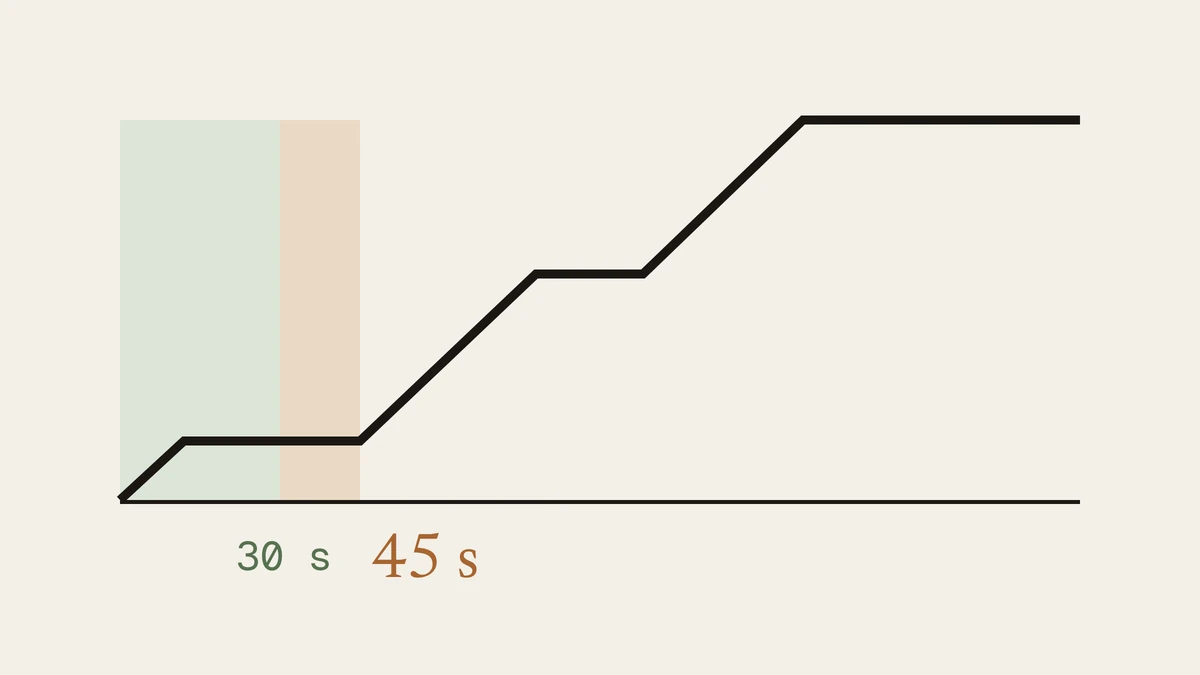
If the shot is only just outside the target window, a grind step is often too much. Changing the dose by about 0.5 g helps: more coffee slows the flow, less lets it run faster. Keep the ratio, so with 18.5 g of coffee aim for about 37 g in the cup.
Shotbook gives this dose tip when the shot is up to 4 seconds outside the window. Further off, it recommends the grind first and fine-tuning with the dose afterwards.
Step by step
- Fix dose and ratio, for example 18 g and 1:2. Which time fits is explained in espresso ratio and time.
- Pull the shot, note time and yield.
- Way too fast: grind finer. Way too slow: grind coarser. Change one thing at a time.
- Just off: adjust the dose by 0.5 g.
- Taste and note what you changed, so you know where to start with the next bag.
When the time is right but the taste is not
If the shot runs within the window and still tastes sour and bitter at once, the water is probably flowing unevenly through the puck. Look at your prep: distribute the grounds evenly, tamp level. The ratio is another lever: a slightly longer shot can round off a sharp espresso.
Common questions
01How many shots does dialing in take?
02Do I have to dial in again for every new coffee?
03My espresso is sour and bitter at the same time. What now?
Keep reading
 Filter · 3 min read
The bloom in pour-over coffee: why fresh coffee needs longer
Read Taste · 4 min read