Espresso ratio and time: how to find your shot.
Two numbers explain almost every espresso: the ratio of ground coffee to drink, and how long the shot runs. The ratio tells you what you pulled. The time tells you whether it is well extracted.
What is the ratio?
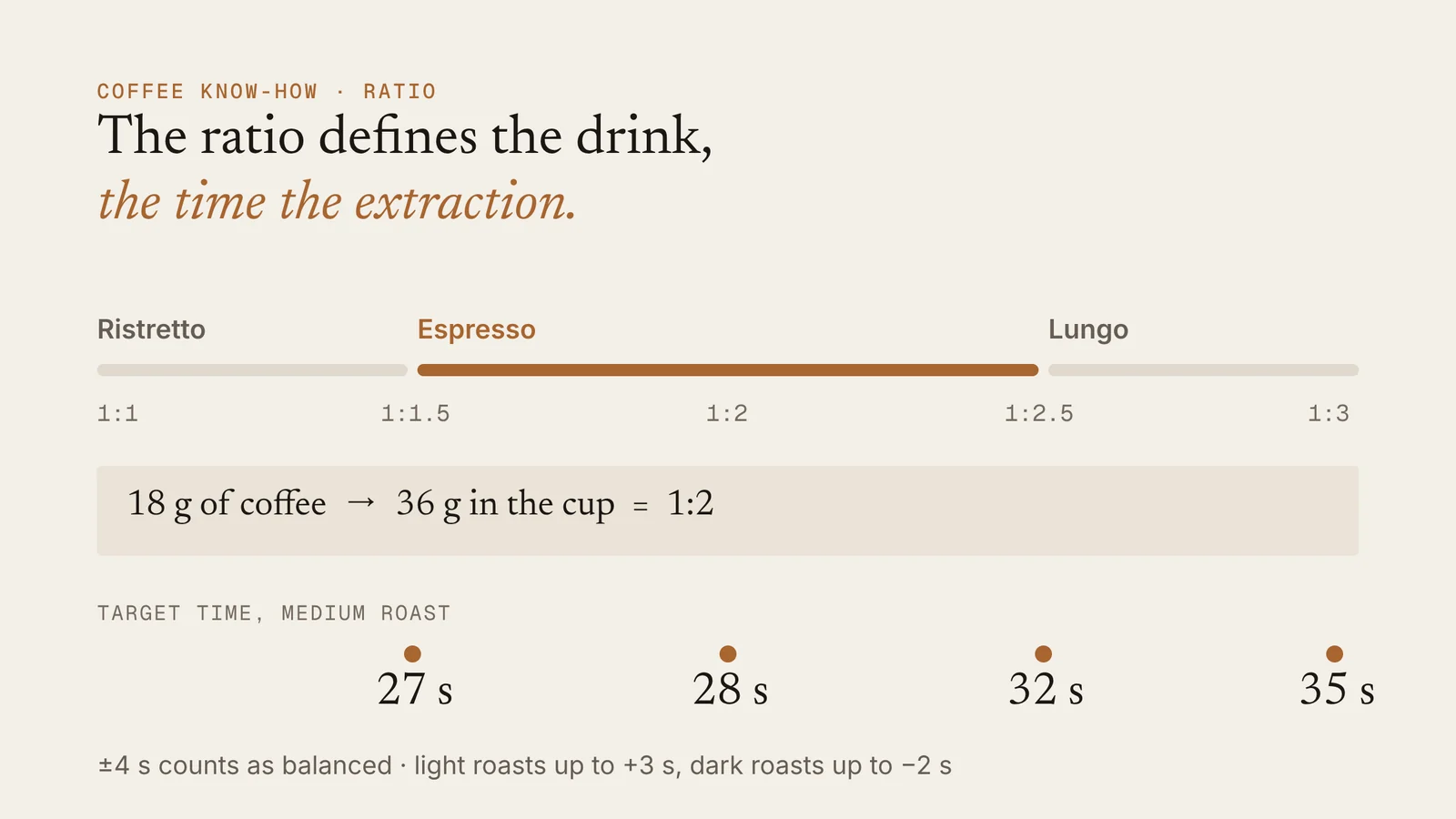
The ratio is the weight of dry ground coffee compared with the drink in the cup. 18 g of coffee becoming 36 g of espresso is a ratio of 1:2. Weigh the drink rather than measuring its volume: the crema makes every millilitre reading unreliable. A small scale under the cup is all you need.
Ristretto, espresso, lungo
The ratio decides which drink you pulled. The boundaries are a common convention rather than a standard. Shotbook uses exactly these:
| Drink | Ratio | With 18 g of coffee |
|---|---|---|
| Ristretto | below 1:1.5 | below 27 g |
| Espresso | 1:1.5 to 1:2.5 | 27 to 45 g |
| Lungo | from 1:2.5 | from 45 g |
Which time fits which ratio?
The more water runs through the coffee bed, the longer the shot may take. Shotbook works with a target time that grows with the ratio and counts everything within ±4 seconds of it as balanced. It measures the total time from starting the shot to stopping it, so pre-infusion is included.
| Ratio | Target time | Balanced |
|---|---|---|
| 1:1.5 | 27 s | 23 to 31 s |
| 1:2 | 28 s | 24 to 32 s |
| 1:2.5 | 32 s | 28 to 36 s |
| 1:3 | 35 s | 31 to 39 s |
These values are for a medium roast. They are a starting point, not a law: a shot outside the window that tastes great to you is a good shot.
Roast level shifts the time
Light roasted beans are denser and release their flavours more slowly. They may run a little longer, dark roasts a little shorter. Shotbook shifts the target time by roast level:
| Roast level | Target time | Example 1:2 |
|---|---|---|
| Light | +3 s | 31 s |
| Medium-light | +2 s | 30 s |
| Medium | ±0 s | 28 s |
| Medium-dark | −1 s | 27 s |
| Dark | −2 s | 26 s |
How to go about it
- Pick a dose that suits your basket (for example 18 g) and keep it fixed for now.
- Choose a ratio. 1:2 is a good start, 1:2.5 for light roasts.
- Pull the shot, stop at your target yield on the scale and note the time.
- Compare the time with the target window. Fix too fast or too slow with the grind, see dialing in your grind.
- Taste. In the end your palate decides, not the stopwatch.
Common questions
01Does pre-infusion count towards the shot time?
02Is 1:2 the best ratio?
03How much coffee goes into the basket?
Keep reading
 Espresso · 4 min read
Espresso too sour or too bitter? How to dial in your grind
Read Filter · 3 min read