Specialty coffee or commercial coffee?
A kilo of coffee at the supermarket costs less than a bag from your local roaster. The difference is not just the price but almost every step: from farming and roasting to how fresh the coffee is when it reaches you.
What does “specialty” mean?
The term comes from the Specialty Coffee Association (SCA). Specialty coffee scores at least 80 out of 100 points in a standardised tasting called cupping. The green coffee is also checked for defects: a 350 g sample may have no major and only very few minor defects.
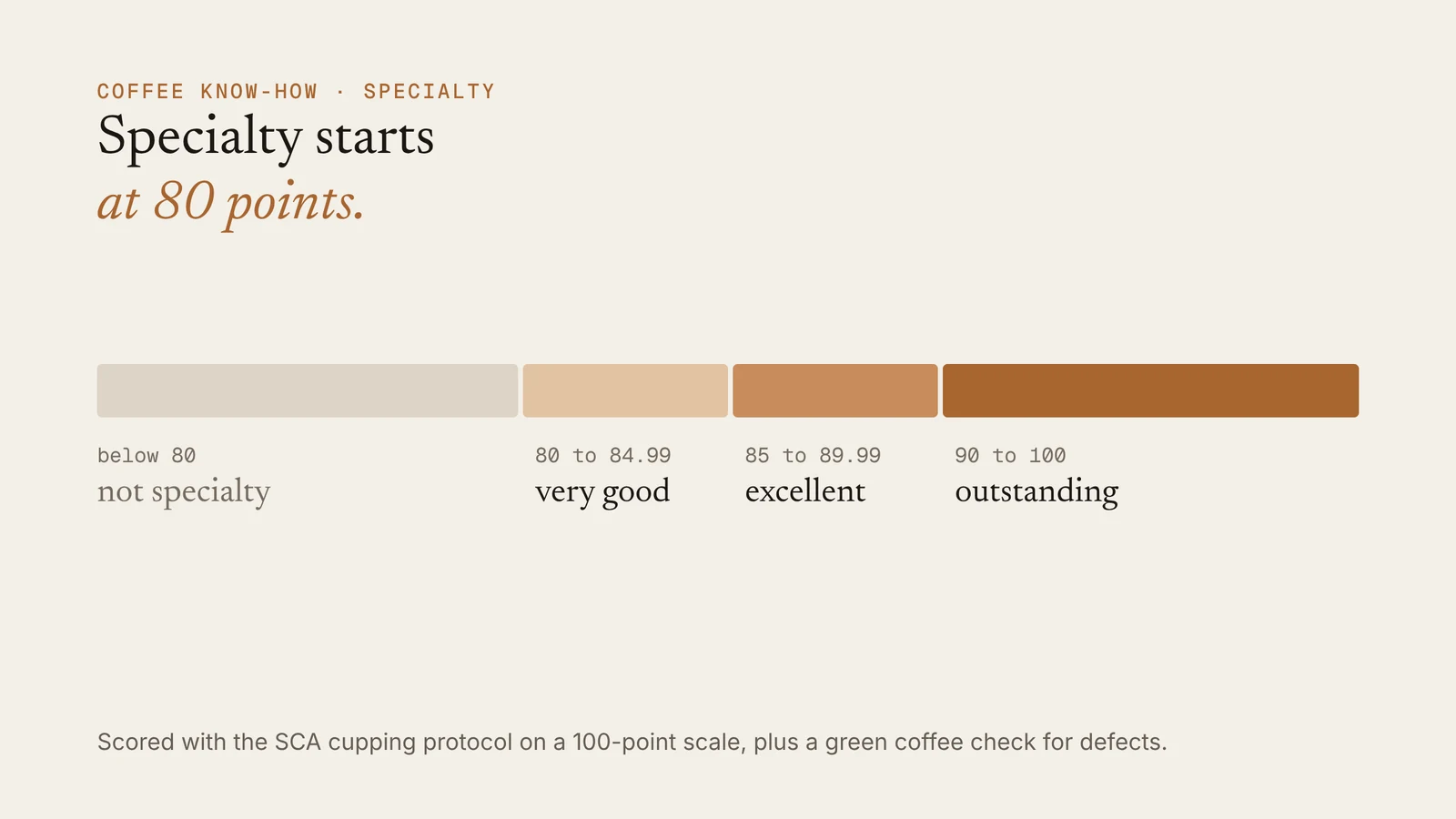
The SCA has developed its assessment system further in recent years. The 80-point threshold is still the common benchmark in the trade.
The differences at a glance
| Specialty | Commercial | |
|---|---|---|
| Origin | country, region, often farm or co-op | blend of many origins, often unnamed |
| Bean | Arabica, variety usually stated | Arabica and Robusta, variety unknown |
| Roast | tailored to the bean, mostly light to medium | often dark and uniform |
| Date | roast date | best-before date |
| Taste | fruit, acidity, sweetness, big differences | consistent, roasty, rather bitter |
Roasting: time over speed
Large roasteries often roast in a very short time at high temperatures to process big volumes evenly. Small roasters usually take more time and adapt the profile to each bean. A dark roast covers origin flavours, a light roast lets them shine but is also less forgiving.
Freshness: roast date over shelf life
Coffee slowly loses aroma after roasting. A roast date tells you how old your coffee really is. A best-before date one or two years ahead says little about that. Freshly roasted coffee is also still releasing a lot of gas, more on that in the bloom in pour-over.
How to spot specialty in the shop
- a roast date on the bag
- origin down to the region or farm, plus variety and process (for example washed or natural)
- tasting notes and a recommendation for espresso or filter
- a named roaster you can ask
Commercial coffee is not “bad”: it is affordable, consistent and exactly right for many people. But if you want to fine-tune the taste and notice differences, specialty takes you much further.
Common questions
01Is specialty coffee always light roasted?
02Is specialty worth it for milk drinks?
03Is Robusta worse than Arabica?
Keep reading
 Cologne · 5 min read
Specialty coffee in Cologne: our pick of cafés for great coffee
Read Espresso · 4 min read